
Where STAR Athens Campus Releases Go
STAR Community Justice Center Athens Campus is a community-based correctional facility for adult men placed by Athens and other participating southeastern Ohio courts. A successful participant may complete the residential program and move into the aftercare plan developed before release. That does not automatically end community control or probation. The sentencing court and supervising probation agency remain the sources for the person’s legal status.
An unsuccessful termination follows a different path. The case may return to the sentencing court for a violation hearing, a modification of community control, another residential placement, jail, or prison action. The actual result depends on the journal entry. A direct transfer also should not be described as a community release merely because the person left STAR’s campus.
How to Confirm a STAR Athens Campus Release
Start with the sentencing case because the SEORJ current roster does not cover STAR residents. The Athens County released inmates guide explains the separate jail and state-prison paths when the person was held elsewhere.
- Identify the sentencing court. Determine whether Athens Common Pleas or another participating county court ordered the placement.
- Search the docket under both facility names. Older entries may say SEPTA Correctional Facility, while newer records use STAR Community Justice Center Athens Campus.
- Read the journal entries. Look for admission or placement, community-control terms, completion, unsuccessful termination, violation proceedings, modification, and termination.
- Contact the facility. Ask whether the resident completed, was terminated, or transferred, and ask which record custodian can confirm the date.
- Verify supervision separately. Contact the supervising probation office or read the court record to learn whether community control remains active.
A fixed program maximum is not an individual release date. Only the person’s case record and program information can establish what happened.
STAR Athens Campus Records and Contact
Direct questions about residence and program status to STAR, then obtain the controlling legal outcome from the court and supervising probation office. Facility confirmation and a court order serve different purposes.
STAR Community Justice Center Athens Campus
Address: 7 W. Twenty-Nine Drive, Nelsonville, OH 45764
Telephone: 740-753-5000
Facility type: Community-based correctional facility
Official profile: ODRC CBCF program profile
When seeking a record, provide the person’s full name, sentencing court, case number, approximate placement dates, and whether the request concerns admission, completion, termination, or transfer. Ask the court clerk for the signed entries in the case. Ask probation for the status information it may release. Do not ask SEORJ for a STAR residence record simply because both facilities are in Nelsonville.
About STAR Athens Campus Correctional Placement
The ODRC community-based correctional facility profile identifies the Athens Campus as an adult-male program serving Athens and other southeastern Ohio courts. Other courts may be considered case by case. It combines a residential correctional setting with programming and aftercare planning, so its record trail differs from both a pretrial jail booking and an ODRC prison sentence.
The words “up to” are important. They describe a program limit, not a promise that every resident stays for that length or leaves on a date calculated from it. The sentencing court can respond to progress, completion, termination, violations, and other developments through its orders.
Athens Court Records for STAR Program Release
For an Athens County Common Pleas placement, CourtView is the durable public starting point. The docket may show the sentence, community-control conditions, an order to enter STAR, violation allegations, hearing results, modifications, completion-related entries, and eventual termination. The clerk’s signed document matters more than a loose summary of the docket line.
Athens County Common Pleas records are available through the CourtView portal. A matter from a different county belongs in that county’s sentencing docket even though the program is physically in Athens County. Geography does not change which court controls the placement.
| Source | Question it answers |
|---|---|
| STAR facility record | Whether and when the resident completed, was terminated, or left under another program event. |
| Sentencing-court journal | What the judge ordered before and after the residential placement. |
| Probation record | Whether supervision remains active and which office has the case. |
| SEORJ roster | Current regional-jail custody only; it is not a list of STAR residents. |
| ODRC Offender Search | State-prison or APA status when the person entered the ODRC system, not routine STAR residence. |
STAR Athens Campus Completion and Aftercare
The official program profile says an aftercare plan is developed before release. That local planning feature helps explain why program completion is a transition rather than a declaration that every legal obligation has ended.
The plan and the court order should be kept conceptually separate. Aftercare addresses the person’s transition following residential programming. The sentencing journal and probation record state the continuing legal terms. Family members seeking to understand the next step should ask which probation office supervises the case and what public order documents the change.
A person can therefore be out of the STAR residence yet remain under community control. The eventual end of supervision is a later event, usually documented through a court termination or another authoritative supervision record. Do not use a completion date as a substitute for that end date.
STAR Athens Campus and the Former SEPTA Name
The Athens Campus was formerly known as SEPTA Correctional Facility. A Fourth District Court of Appeals decision records that SEPTA dissolved as a legal entity on July 1, 2019 and the facility became STAR’s Athens Campus. That history is more than local trivia because older case files may preserve the prior name.
When researching a placement that crosses the transition, search the docket for “SEPTA,” “STAR,” “Athens Campus,” and the facility address. The Fourth District decision describing the transition helps reconcile the names, but the person’s own sentencing docket remains the authority for that placement.
The published Fourth District decision supplies the documented name-change history.
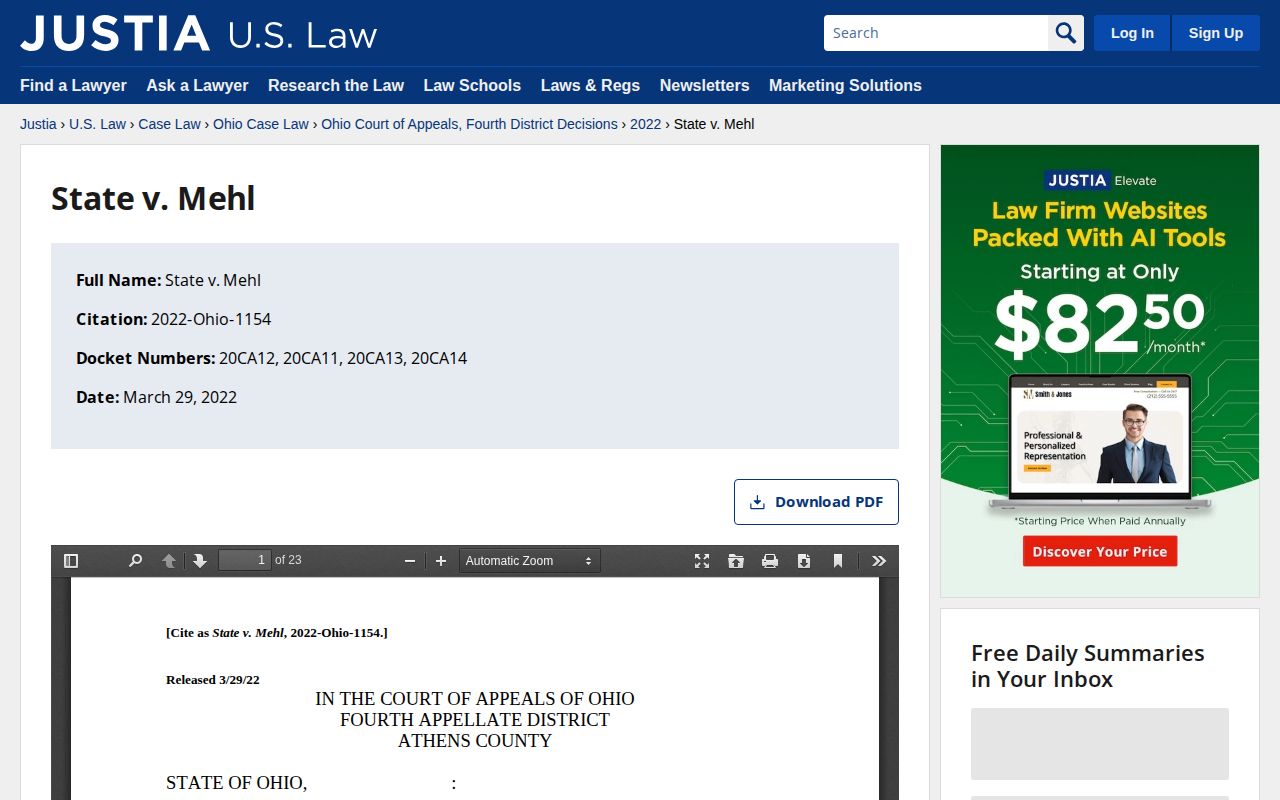
The image supports the name reconciliation but does not replace the resident’s own sentencing order.
A change of facility name does not create two separate detention histories. It also does not justify treating the former entity as another active facility. The present page covers the current Athens Campus and explains the older label only so that readers can follow the record trail.
STAR Athens Campus Is Not the Regional Jail
STAR and Southeastern Ohio Regional Jail serve different correctional roles. SEORJ is the regional county-level jail used for Athens adult jail commitments. STAR is a court-ordered residential community corrections program. The two should not share a lookup method simply because both are located in Nelsonville.
A current SEORJ roster entry supports jail custody at the roster’s printed time. It says nothing about current STAR residence. Conversely, STAR completion does not prove that a person was released from a jail, discharged from ODRC, or free of supervision. If a court responds to unsuccessful termination by ordering jail or prison, search that receiving system after reading the journal entry.
Note: The official facility map identifies no ODRC prison at this Athens County location, and STAR must not be described as one.
Detainers and STAR Athens Campus Release Records
A detainer or warrant can affect where a person goes after a residential placement ends, but no Athens or STAR ICE detention contract was verified in the research. Do not imply that immigration detention is a routine STAR function.
If a court or facility record names a receiving custodian, follow that named system. An ICE detainer can make an apparent release from one custodian a transfer to ICE, while a state commitment can lead into ODRC. The presence of a receiving-agency field or a court commitment order is the reason to change lookup routes. Without such a record, do not infer a transfer based on rumor or a missing online entry.
Limits of STAR Athens Campus Online Release Information
No public current-resident roster or released-resident archive was identified for STAR in the project sources. That absence makes a case-specific inquiry essential. It also means the SEORJ vendor roster cannot be repurposed as a substitute.
Online court information can lag or omit restricted material. A sealed matter may not be publicly visible. Probation details may also have disclosure limits. Ask for the releasable record rather than demanding an entire supervision file. If a summary conflicts with a signed entry, contact the clerk for the controlling document and verify the current status with the supervising office.
The clearest statement may require three dates: the day the court ordered placement, the day STAR reports completion or termination, and the day community control ends. Those dates answer different questions and should not be collapsed into one “release date.”